

To properly maintain a vinyl wrap and prevent fading, staining, and edge lifting, hand-wash the vehicle regularly with a pH-neutral automotive shampoo and remove contaminants like bug splatter, bird droppings, and tree sap before they can bake into the film. Avoid high-pressure drive-through car washes, petroleum-based solvents, and abrasive polishes that degrade the top coat. Storing the car in a covered area and applying a specialized ceramic coating engineered for flexible films provides an essential defense against UV degradation and seam separation.
Comprehensive Guide to Preserving Your Vehicle’s Custom Finish
A custom vinyl wrap changes your vehicle’s look while providing a protective barrier over the underlying factory paint. However, maintaining that finish requires deliberate care. Left unmaintained, direct UV rays, intense heat, road grime, and airborne acids break down the film, causing dullness, deep staining, and peeling along panel edges.
Understanding how polyvinyl chloride (PVC) film reacts to environmental stressors is key to ensuring its longevity and protecting your automotive investment.
Understanding the Vulnerabilities of Vinyl Wrapping
Automotive vinyl wraps are engineered PVC films designed to conform to complex body contours. While durable, vinyl remains more porous than factory clear coats and responds dynamically to temperature changes, chemical exposure, and friction.
Sun Exposure and UV Degradation
Prolonged exposure to ultraviolet radiation breaks down the chemical bonds within the film’s pigment layers. Ambient heat accelerates this degradation by drying out plasticizers, rendering the vinyl brittle and faded over time.
Contaminants and Porous Absorption
Because vinyl is sensitive to organic acids and alkaline residues, substances like tree sap, bird droppings, and hard water minerals etch into the porous surface within hours of direct sunlight exposure.
Edge Shear and Thermal Stress
Vinyl is applied under tension around door jambs, panel edges, and body seams. As ambient temperatures fluctuate, the material expands and contracts. If water or road grit penetrates an edge, the adhesive bond breaks down and edge lifting begins.
Step-by-Step Cleaning and Maintenance Protocols
Your washing technique directly impacts your wrap’s lifespan. Aggressive mechanical force or incorrect chemicals cause micro-marring, edge separation, and surface hazing.
1. Hand Washing Method (Two-Bucket Technique)
Clean your wrapped vehicle by hand whenever possible:
- Step 1: Rinse the entire vehicle thoroughly with cool water to dislodge loose grit.
- Step 2: Use two distinct wash buckets equipped with grit guards, one filled with a pH-neutral automotive shampoo and the other with clean rinse water.
- Step 3: Wash panel by panel using a soft microfiber mitt, moving systematically from top to bottom.
- Step 4: Rinse with low-pressure hose water, keeping the stream parallel to seam lines rather than blasting directly beneath them.
- Step 5: Dry immediately with plush microfiber towels to eliminate mineral spotting.
2. Pressure Washing Guidelines
If using a pressure washer, follow these operational limits:
- Maintain a minimum distance of 12 to 18 inches from the bodywork.
- Keep operating pressure below 2,000 PSI.
- Ensure water temperature remains under 140°F (60°C).
- Spray perpendicular to panels. Never direct high-pressure spray straight at an exposed vinyl edge or seam gap.
3. Spot Cleaning Immediate Contaminants
Keep a dedicated wrap detailer and microfiber towel in your vehicle. When organic fallout hits the finish, mist the spot lightly, allow it to dwell for 30 seconds to soften the residue, and gently wipe it away without scrubbing.
Preventing Fading, Staining, and Edge Lifting
Preventing Fading and Discoloration
UV radiation drives color loss. Applying a dedicated ceramic sealant designed for vinyl creates a protective barrier against solar breakdown without altering matte, satin, or gloss textures.
Preventing Staining
In coastal regions, high atmospheric humidity mixed with airborne ocean salt forms a corrosive layer on exterior surfaces. Vehicle owners maintaining vinyl wraps in Coral Gables face accelerated film drying from this environmental combination. Rinsing the vehicle every one to two weeks neutralizes salt deposits before chemical staining occurs.
Preventing Edge Lifting
Edge failure stems from mechanical stress, thermal shrinkage, or harsh car wash detergents. Avoid touchless car washes that use high-pH chemicals or high-pressure side nozzles angled directly at panel gaps.
Advanced Protection: Sealants and Ceramic Coatings
Layering a dedicated coating over vinyl simplifies routine maintenance and extends the operational life of the installation.
| Protection Type | Lifespan | UV Resistance | Hydrophobicity | Edge Sealing |
| Standard Spray Wax | 2–4 Weeks | Low | Moderate | Minimal |
| Vinyl Spray Sealant | 3–6 Months | Moderate-High | High | Moderate |
| Ceramic Coating for Vinyl | 2–3 Years | Maximum | Maximum | Superior |
Ceramic formulations optimized for flexible substrates seal the film’s pores, blocking contaminants from etching while creating a slick surface that sheds water and dirt.
Environmental Defense and Storage Best Practices
Storage conditions directly dictate film longevity:
- Indoor Storage: Parking in a garage shields the film from intense midday sun, night dew, and industrial fallout.
- Car Covers: If outdoor parking is unavoidable, use a breathable, fitted cover. Clean the vehicle before covering to prevent grinding dust into the vinyl.
- Coastal Climate Care: Drivers maintaining vinyl wraps in Coral Gables, FL must manage intense heat paired with ocean salt air. Rinsing the undercarriage and body panel edges removes microscopic salt buildup that weakens adhesive bonds.
What to Avoid: Common Maintenance Mistakes
- Abrasive Compounds: Never use cutting compounds, rubbing polishes, or rotary buffers on vinyl films.
- Petroleum Solvents: Avoid solvents containing naphtha, kerosene, or xylene, as they dissolve vinyl adhesives.
- Dry-Wiping: Wiping dry vinyl with a microfiber towel drags surface dirt across the finish, causing scratch marks.
- Brush Car Washes: Rotational nylon bristles catch on film seams and heavily scratch gloss or matte surfaces.
Our Proprietary Approach to Elite Vinyl Protection
Extending vinyl wrap longevity requires disciplined surface preparation, precise installation mechanics, and ongoing care. At Detail Boutique, our workflow is defined by being the most precise XPEL authorized installer for exotic and luxury vehicles, supported by 20+ years of experience, master technicians, protection built for salt air and UV, and every job documented from start to finish.
Our installation methodology stops edge lifting at the source:
- Surface Decontamination: Every panel undergoes chemical decontamination and paint prep to establish a pure surface for adhesive contact.
- Tension-Free Installation: Master technicians lay the film without over-stretching, maintaining structural integrity across complex body lines.
- Deep Edge Tucking: Seams are wrapped around internal panel edges, removing exposed borders from high-pressure airflow and wash spray.
- Thermal Curing & Protection: Formulated for high UV and salt-air exposure, each job is heat-cured and sealed with hydrophobic coatings to guard against acid staining and premature fading.
- Photographic Documentation: The entire process is documented from disassembly through final inspection to maintain complete record transparency for owners nationwide.
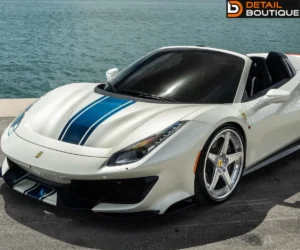
Supercar owners seeking long-term durability, such as those sourcing Coral Gables vinyl wraps rely on this structured process to preserve visual quality and vehicle value.
People Also Ask
How long does a professionally installed vinyl wrap last?
A high-quality wrap installed by master technicians typically lasts 5 to 7 years. Lifespan depends on sun exposure, garage storage, and maintenance frequency.
Can you apply ceramic coating over a vinyl wrap?
Yes. Ceramic coatings engineered specifically for flexible vinyl enhance hydrophobic properties, block UV rays, and protect against environmental staining without altering matte, satin, or gloss finishes.
How do you fix a vinyl wrap edge that is starting to lift?
Clean beneath the lifted edge with isopropyl alcohol, let it dry completely, apply an approved adhesive primer, and carefully post-heat the film with a heat gun to reset the adhesive memory. For high-end vehicles, consult a certified installer.
Will intense sun exposure cause vinyl wraps to fade?
Yes. Unprotected sunlight breaks down color pigments and dries out vinyl plasticizers over time. Using UV-inhibiting spray detailers or storing the vehicle indoors prevents premature fading.
Protect Your Investment with Detail Boutique
Preserving exotic and luxury vehicle finishes requires absolute precision. At Detail Boutique, we approach vehicle protection as an exacting craft. From Paint Protection Film (PPF) and ceramic coatings to custom vinyl wraps, paint correction, and window tinting, our shop-based facility is designed around clean room standards to ensure flawless application.
Learn more about our installation process or book a consultation by contacting us today!